
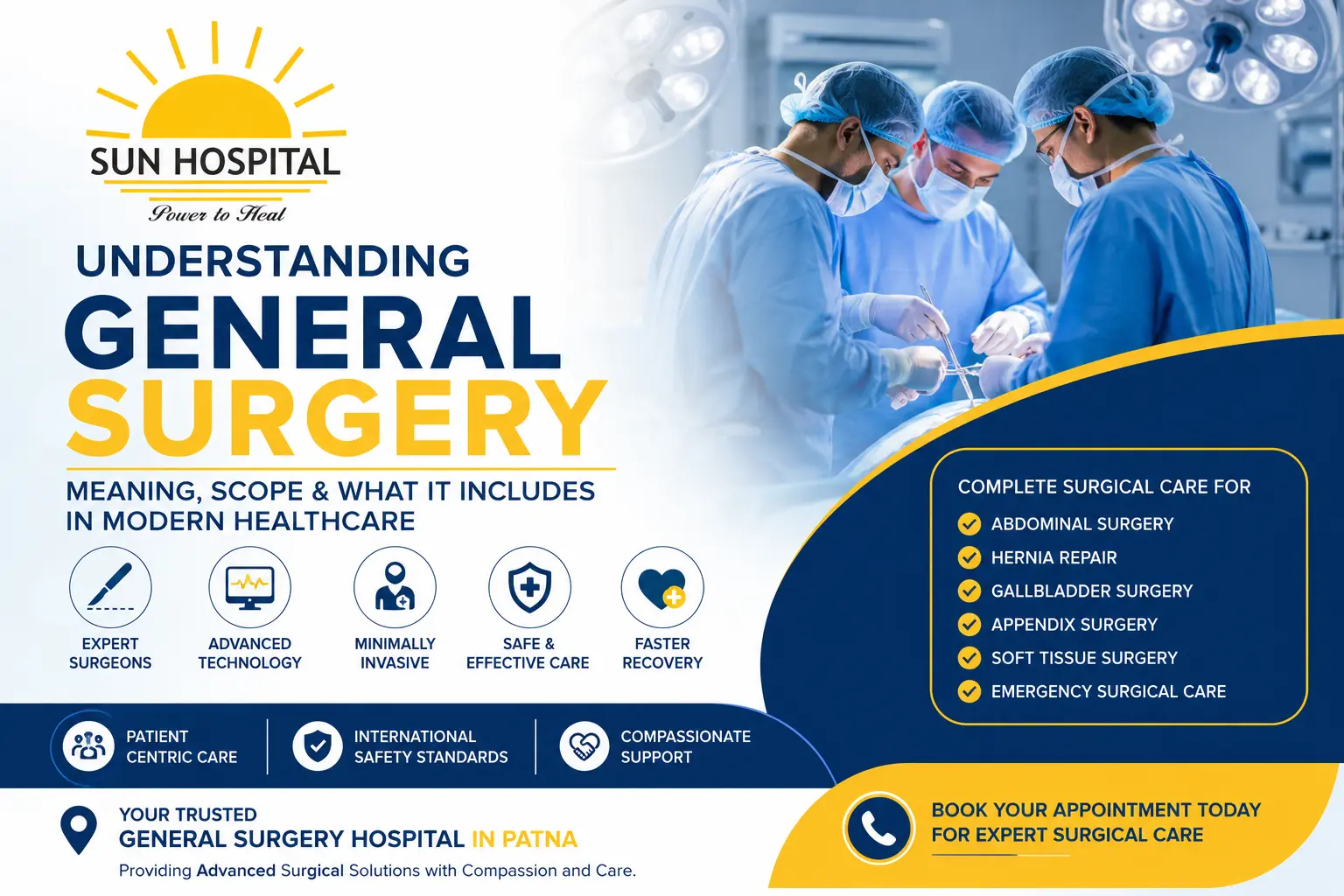
Surgery isn’t what it used to be, and that’s a good thing. Twenty years ago, a gallbladder operation could mean a week in bed and a scar you’d be reminded of every time you looked in the mirror. Now it’s often a day procedure with a few small marks that fade within months. That change matters whether you’re dealing with something routine or rushing to the hospital in the middle of the night with a stomach that’s suddenly gone very wrong. It’s also exactly why the general surgery hospital in Patna you choose isn’t a detail, it’s the whole ballgame.
A good surgeon matters, obviously. But so does everything around that surgeon, the nurses who actually check on you, the team that catches a problem before it becomes a crisis, the follow-up that doesn’t just stop the second you’re discharged. At Sun Hospital, that’s the philosophy the surgical team works by: modern operation theatres, minimally invasive techniques when they make sense, and a genuine focus on getting people through surgery and back to their lives, not just off the operating table. It’s part of why the hospital keeps coming up as one of the best hospitals in Patna.
What Is a General Surgery Hospital in Patna?
Simply put, it’s where you go when a problem inside your body needs to be fixed with an operation, not just a tablet. That covers a surprising amount: stomach and intestinal issues, gallbladder disease, hernias, appendix trouble, skin and soft tissue conditions, and the kind of surgical emergencies that don’t wait for office hours.
What separates general surgery in Patna from the more specialized departments is breadth. A general surgeon isn’t tied to one organ, they’re trained across systems, which is a big part of why this is usually the first department patients land in. But surgical skill alone isn’t enough. A hospital that actually does this well backs it up with real diagnostic support, a competent anesthesia team, ICU care for the cases that need it, and a recovery process that doesn’t end the moment you walk out the door.
Scope of General Surgery Hospital in Patna
There’s a lot more under this umbrella than people assume, planned procedures on one end, sudden emergencies on the other.
Abdominal Surgery at a General Surgery Hospital in Patna
Ask any general surgeon what they see the most, and abdominal cases will almost always come up first. Appendicitis, gallbladder problems, intestinal complications, infections deep in the abdomen, plus a handful of digestive conditions that medicine simply can’t fix on its own.
The upside now is that imaging is sharper and laparoscopic instruments have gotten smaller, so surgeons can usually find the exact problem and deal with it without the large incisions that used to be the norm. Less cutting generally means less pain and a shorter hospital stay.
Hernia Treatment at a General Surgery Hospital in Patna
A hernia is tissue or an organ pushing through a weak point in the muscle wall around it. It rarely stays small, left untreated, it tends to grow, and along the way, it can get painful, sometimes dangerously so.
Before deciding on treatment, the surgeon looks at how big it is, where it sits, and how advanced it’s gotten, then chooses between open surgery and a laparoscopic repair. Timing matters more than people realize here, wait too long and you risk strangulation, which turns a fairly simple fix into a real emergency.
Gallbladder Surgery at a General Surgery Hospital in Patna
Gallstones are, honestly, one of the most common reasons people end up needing surgery in the first place. When they block bile flow, the result is sharp abdominal pain, swelling, or an infection that just doesn’t settle on its own.
Most surgeons now prefer laparoscopic gallbladder removal, and it’s easy to see why, smaller cuts, noticeably less discomfort afterward, and a return to normal life that’s a lot faster than the older open-surgery route.
Common Conditions Treated by a General Surgery Hospital in Patna
The list of things a general surgeon actually handles is longer than most people expect.
Appendix Disorders
Appendicitis doesn’t really warn you before it hits. It comes on fast and needs to be treated fast. Catch it early, and the odds of the appendix rupturing drop sharply, recovery tends to be quicker too.
Soft Tissue and Skin Conditions
Cysts, lipomas, abscesses, skin infections, benign growths, general surgeons deal with these all the time. Removing them early, instead of waiting around and hoping they go away, usually prevents infection and just makes daily life more comfortable.
Breast Conditions
Complicated breast cases usually go to a specialist, sure. But general surgeons are often the first ones to look at a lump or infection, work out what it actually is, and either treat it directly or send the patient for further tests.
Emergency Surgical Conditions
Sudden abdominal pain, an intestinal blockage, a perforation, a trauma injury, a severe infection, these are the cases where every minute counts. Fast diagnosis followed by fast surgery is often what separates a full recovery from something life-threatening.
Why Modern General Surgery Has Changed Healthcare
Technology really has reshaped what surgery looks like, this isn’t an exaggeration.
Minimally Invasive Surgery at a General Surgery Hospital in Patna
Plenty of operations that once needed a large open cut can now be done laparoscopically. Small instruments combined with high-definition cameras give surgeons a level of precision that simply didn’t exist a generation ago.
For the patient, that usually means less pain afterward, less blood loss, a shorter hospital stay, a quicker return to everyday routines, and a lower chance of picking up an infection along the way.
Advanced Diagnostic Support Before Surgery
No surgeon should ever walk into an operation guessing. That’s where lab tests, digital imaging, ultrasounds, and CT scans come in, they give the team a clear, accurate picture of what’s actually going on before any decision gets made.
Sometimes that same workup shows surgery isn’t even necessary and the condition can be handled another way. Either way, the point stands: know before you cut.
Who Should Visit a General Surgery Hospital in Patna?
If any of this sounds familiar, it’s worth getting checked at a general surgery hospital in Patna:
- Abdominal pain that keeps coming back
- Gallstone attacks that won’t quit
- Swelling around the groin or abdominal wall
- Stomach pain that hits suddenly and hard
- A wound that just won’t close
- Painful lumps or abscesses on the skin
- Rectal bleeding you can’t explain
- Digestive trouble that keeps recurring
- Any abdominal emergency
Getting checked early almost always means a simpler diagnosis and a clearer path forward, and a much lower chance of things escalating.
Benefits of Choosing an Experienced General Surgery Hospital in Patna
Most people don’t think much about which hospital they walk into. But honestly? That choice shapes the whole outcome. It’s not something to decide in a hurry.
Comprehensive Evaluation
Before anyone gets booked for an operation, there needs to be a real clinical exam and the correct diagnostic tests done, not some rushed five-minute check. Skip that part, and you’re basically letting the surgeon guess. Do it right, and the surgeon actually knows what they’re dealing with before they pick up a scalpel.
Personalized Surgical Care
Two people can come in with what looks like the exact same problem, and still need totally different treatment. Age matters. So does their existing health, their medical history, and what a realistic recovery even looks like for them. Treat everyone the same way, and eventually, that approach falls apart.
Multidisciplinary Support
No matter how good a surgeon is, they’re not doing this alone. There’s an anesthesiologist, physicians, nurses, physiotherapists, a whole team, working together before the surgery, during it, and well after. That teamwork, more than any one person’s skill, is usually what keeps a patient safe.
Modern Infrastructure
Properly equipped operation theatres, strict infection control, up-to-date anesthesia methods, ICU support on standby if it’s needed, none of this sounds exciting written down. But it’s exactly what quietly stops complications before they happen.
Recovery After Surgery at a General Surgery Hospital in Patna
Getting through the surgery itself is really just step one. The actual healing happens afterward. And how long that takes really depends on the procedure and the patient’s overall health, but listening to medical advice genuinely changes how smooth that recovery is.
Follow Postoperative Instructions Carefully
Once the surgery’s behind you, the doctors will hand over clear instructions, which medicines to take, how to look after the wound, how much you can move around, what to eat and what to steer clear of. Stick to it, and infection risk drops while healing picks up speed.
Brush it off, and things can go downhill fast, sometimes into real complications. Staying in touch with the surgical team even after you’re discharged is usually what catches a small problem before it turns into a big one.
Nutrition and Physical Activity After General Surgery in Patna
Eating properly matters more than most people realize, enough protein, the right vitamins and minerals, staying hydrated. All of it speeds up tissue repair and keeps your immune system working the way it should.
Getting back into physical activity needs to happen slowly, and only the way the surgeon says. Even a short walk here and there, along with whatever exercises are recommended, helps blood flow, eases stiffness, and lowers the chance of a clot forming.
Importance of Regular Follow-Up Visits
Follow-up visits give the surgeon a chance to check how the wound’s healing, take out stitches if that’s still pending, and catch anything that looks like trouble before it actually becomes trouble.
They’re also just a natural moment to ask whatever’s been on your mind, when it’s okay to go back to work, how to ease back into exercise, how to adjust your day-to-day once everything’s settled.
When Should You Consult a General Surgery Hospital in Patna?
Catching things early usually stops a small issue from turning into a full-blown emergency. It’s worth visiting a general surgery hospital in Patna if any of this sounds like you:
- Abdominal pain that just won’t go away
- Sudden swelling around the groin or abdominal wall
- Severe pain that seems tied to gallstones
- Signs pointing to appendicitis, fever along with lower abdominal pain
- A wound or skin infection that just won’t heal
- Painful cysts or abscesses
- Rectal bleeding or digestive symptoms that keep coming back
- Any lump or swelling in the abdomen you can’t explain
Getting checked sooner rather than waiting it out almost always means a better outcome, and a lot fewer complications later.
Why Choose Expert Care at a General Surgery Hospital in Patna?
A good outcome isn’t just about what happens in the operating room. It’s experienced surgeons, real diagnostic backup, well-equipped operation theatres, safe anesthesia, and care that doesn’t stop the second the stitches go in.
If you’re looking for a general surgery hospital in Patna, find one that actually practices evidence-based medicine, uses minimally invasive techniques where they make sense, and builds the treatment plan around you, not around some standard checklist.
At Sun Hospital, experienced surgeons work alongside a full multidisciplinary team, using modern equipment and protocols that hold up to international standards. It’s earned its place among the best hospitals in Patna for a reason, patient safety, clinical quality, and genuine care stay front and center throughout, not just while the surgery’s happening.
The hospital also follows the healthcare practices set out by the World Health Organization (WHO), keeping patient safety, infection prevention, and surgical quality at the core of everything it does.
Conclusion
General surgery in Patna is still one of the most essential parts of modern medicine, and it earns that spot by covering everything from everyday, routine issues to serious, life-threatening ones. Better techniques, safer anesthesia, and sharper diagnostic tools have made procedures far safer and far less invasive than they were even a decade back.
Whether it’s appendix removal, gallbladder surgery, hernia repair, a soft tissue procedure, or an emergency abdominal operation, choosing an experienced general surgery hospital in Patna means an accurate diagnosis, proper treatment, and real support once the surgery’s behind you. Getting checked early, acting without waiting around, and having a plan that’s actually built around you, that’s what gets people back to their normal lives faster, and with a lot more confidence.
Frequently Asked Questions (FAQs)
- What is a general surgery hospital?
It’s a hospital that handles conditions involving the abdomen, digestive system, gallbladder, appendix, hernias, skin, soft tissues, and a range of surgical emergencies.
- When should I visit a general surgery hospital in Patna?
If you’ve got ongoing abdominal pain, a hernia, gallstones, signs pointing to appendicitis, an infected wound, cysts, abscesses, or really anything that might need surgical evaluation, don’t wait around, get it checked.
- What procedures are commonly performed by general surgeons?
Appendectomies, gallbladder removal, hernia repair, soft tissue surgery, breast surgery, skin lesion removal, and emergency abdominal operations, that’s basically what fills up a general surgeon’s day.
- Is laparoscopic surgery better than open surgery?
Usually, yes, smaller cuts, less pain, quicker recovery, lower infection risk, shorter hospital stay. But it really depends on the patient and the specific condition, so there’s no one right answer for everyone.
- How long does recovery take after general surgery?
It varies a lot from person to person, and depends heavily on the kind of surgery done. Most people are back to their usual routine within a few weeks, though the bigger operations can take longer and sometimes need extra rehab.