
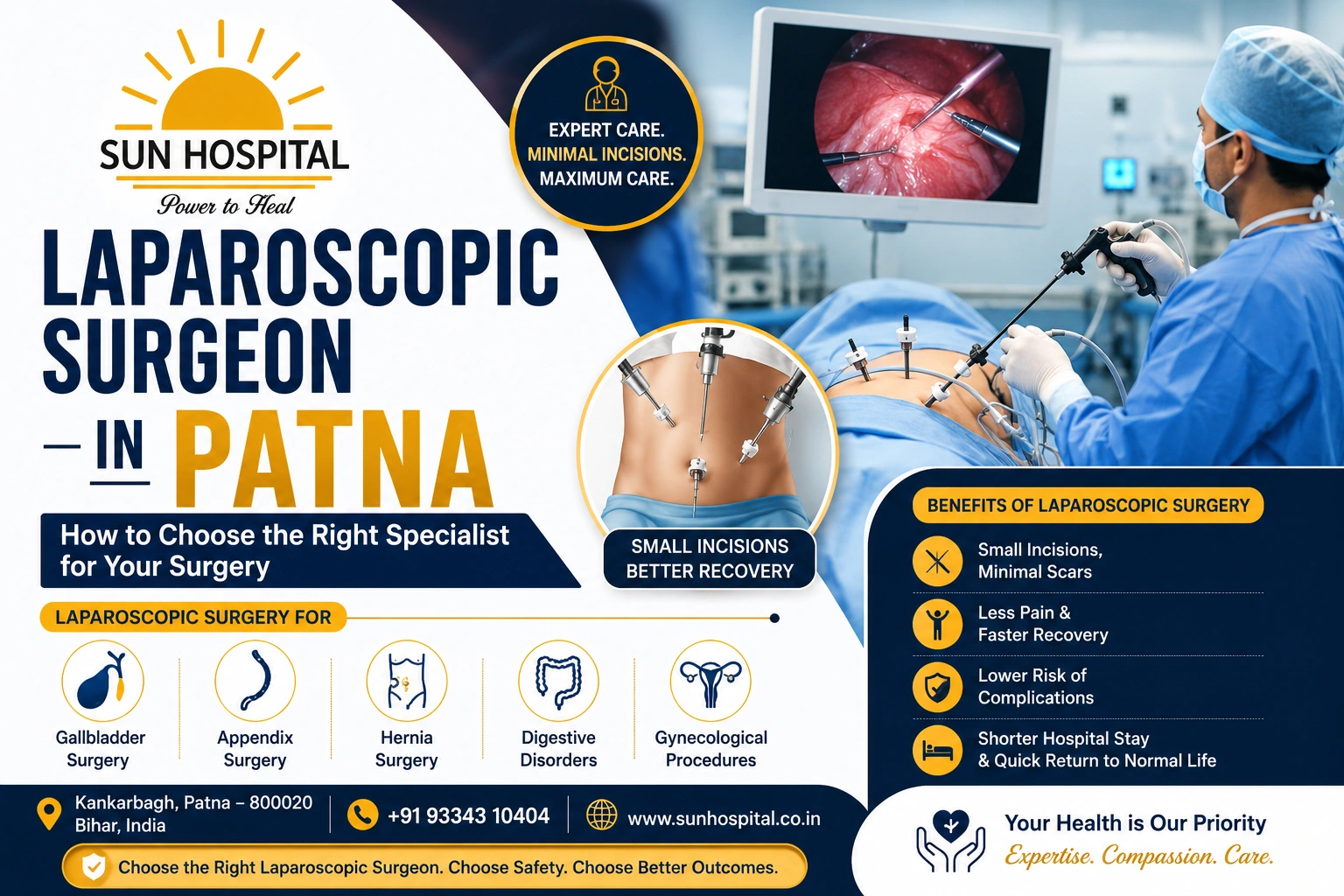
Nobody wakes up excited about the idea of surgery. If a doctor has just told you or someone in your family that an operation is needed, chances are your head is already full of questions, and honestly, that’s normal. The good news is that a lot of procedures today don’t require the big cuts they once did. Laparoscopic Surgeon in Patna specialists use small incisions, a camera, and precise surgical instruments to perform selected procedures with greater control. But good outcomes depend on several things working together: the condition being treated, the surgeon’s experience, the hospital’s facilities, and the quality of care you receive before, during, and after the operation.
So if you’re looking for a Laparoscopic Surgeon in Patna, start by really understanding your own diagnosis first. Ask questions. A surgeon you can trust won’t rush you through a five minute chat and hand you a date for surgery. They’ll sit with you, explain what’s going on in plain language, tell you what the risks are, mention if there’s an alternative worth considering, and give you an honest picture of what recovery actually looks like, not the polished version.
What Does a Laparoscopic Surgeon in Patna Do?
Put simply, a laparoscopic surgeon handles certain operations without opening you up the traditional way. Instead of one long cut, they work through a handful of very small openings, just enough room for a thin camera and a couple of specialized instruments to get in and do the job.
Understanding minimally invasive surgery
Here’s roughly how it plays out in the operating room. A tiny camera goes in through one of the small openings and beams a magnified picture of the surgical area onto a screen. The surgeon is essentially operating while watching that screen, guiding the instruments with a steady hand and a lot of practice behind them.
Laparoscopic surgery in Patna has become fairly routine now for things like gallbladder trouble, appendicitis, hernias, and a handful of other abdominal conditions. That said, and this is worth repeating, it isn’t automatically the right call for everyone. Every patient needs a proper workup first. Only after that can a surgeon actually say whether the minimally invasive route makes sense for you specifically.
When Should You Consult a Laparoscopic Surgeon in Patna?
Usually, it comes down to symptoms that won’t quit, test results that point somewhere specific, or a diagnosis your doctor has already given you.
Persistent abdominal discomfort
If your stomach has been hurting on and off for a while, don’t just wait it out, especially if there’s vomiting, fever, odd changes in your bowel habits, bloating, or you’re struggling to eat properly. A lot of different things can cause pain like this, so figuring out the actual cause matters more than guessing at a fix.
Gallbladder problems
Gallstones have a habit of announcing themselves right after a meal, usually with a nagging pain in the upper abdomen. Some people also get nauseous, throw up, or just feel off in a way that keeps coming back. When it gets to the point where gallbladder surgery is the recommendation, a laparoscopic approach is often the go-to, assuming it’s medically appropriate for that patient.
Appendicitis
This one tends to sneak up gradually. It often starts as a vague ache somewhere around the belly button before settling into a sharper, more localized pain, usually on the lower right side. Fever, nausea, vomiting, not wanting to eat, these tend to show up too. When surgery is needed, appendix surgery in Patna through a minimally invasive method is often on the table for suitable patients.
Hernia
A hernia is usually pretty visible, a bulge or swelling that gets more noticeable when you cough, lift something, or move a certain way. Before jumping to conclusions, a surgeon will look at what type of hernia it is and how far along it’s gotten, then decide whether to keep an eye on it or move ahead with actual hernia surgery.
How to Choose the Right Laparoscopic Surgeon in Patna
This shouldn’t come down to whoever shows up first on Google. Dig a little deeper, look at qualifications, real hands-on experience, how the surgeon communicates, what hospital they’re attached to, and how seriously patient safety is treated.
Check qualifications and surgical experience
Just ask. Ask about their medical training, their specialization, and how many times they’ve actually performed the specific procedure you need. This matters more than people realize, because laparoscopic surgery isn’t one skill, it’s dozens of slightly different skills depending on what’s being operated on. A surgeon who’s done a procedure hundreds of times brings something a newer surgeon simply hasn’t had the chance to build yet.
Understand the surgeon’s approach
A surgeon worth your time will explain why they’re recommending surgery in the first place, and whether there’s a non-surgical route that could work instead. By the end of that conversation, you should have a decent grasp of what’s actually going to happen, roughly how long it’ll take, what kind of anesthesia is involved, and what the days and weeks after might look like.
Ask about minimally invasive options
A lot of people search for a Laparoscopic Surgeon in Patna for one simple reason, they want to know if the smaller, less invasive option is even possible for their condition. Just remember, that decision needs to be based on what’s medically right for you, not the assumption that laparoscopic is always the better choice no matter what.
Consider hospital infrastructure
The surgeon is only half the picture, honestly. Behind them needs to be a hospital with proper operating theatres, dependable anesthesia support, decent diagnostic services, nursing staff who know what they’re doing, tight infection control, and close monitoring once the surgery is done.
If you’re weighing options for advanced laparoscopic surgery in Patna, look at both sides together, the person holding the scalpel and the place where the surgery actually happens.
What Are the Benefits of Laparoscopic Procedures?
When it genuinely fits the patient’s condition, laparoscopic surgery can offer some real, tangible advantages over the traditional open approach.
Smaller incisions
The cuts are noticeably smaller than what you’d see with open surgery. Less cutting usually means less trauma to the tissue around it, which in turn tends to make caring for the wound afterward a good deal simpler.
Potentially faster recovery
Plenty of patients find themselves back to their regular routine sooner than they expected. Recovery still isn’t a fixed number though, it depends on the operation itself, your general health, and whether anything unexpected crops up along the way.
Reduced postoperative discomfort
Smaller wounds tend to hurt less, generally speaking, though everyone experiences pain differently. Good pain management still matters regardless of which surgical method was used.
Shorter hospital stay in selected cases
In a fair number of cases, patients get to go home sooner than they would after comparable open surgery. How long the actual stay ends up being depends on what procedure was done and how the body responds afterward.
Common Procedures Performed Using Laparoscopic Techniques
Laparoscopic methods stretch across quite a few different procedures, though not everyone is a candidate for this route.
Laparoscopic gallbladder surgery
Taking out the gallbladder, usually because of stubborn gallstones, is one of the more commonly performed laparoscopic surgeries out there. It’s removed through a few small cuts with specialized tools, and most people bounce back noticeably faster compared to open surgery.
Laparoscopic appendectomy
When appendicitis needs surgical treatment, removing the appendix through a minimally invasive method is often possible. The surgeon will weigh the patient’s specific situation before settling on the right technique.
Laparoscopic hernia repair
Some hernias are well suited to laparoscopic repair, though it really depends on the location, how large it’s grown, whether there was a previous surgery in that area, and the patient’s overall health.
Other abdominal procedures
Depending on what the surgeon specializes in and what the hospital can support, laparoscopic techniques sometimes get used for other abdominal or digestive concerns too. Ask your surgeon directly whether it applies to your specific diagnosis.
What Happens During a Laparoscopic Consultation?
Think of your first visit as a chance to actually understand what’s going on, not just get told what to do. Expect the surgeon to ask about your symptoms, your medical history, current medications, allergies, any past surgeries, and any reports or scans you’ve already had done.
Medical assessment and diagnosis
There’s usually a physical exam first, followed by whatever tests make sense, blood work, an ultrasound, a CT scan, that sort of thing. These results are what actually help the surgeon pin down what’s causing your symptoms and figure out the right plan going forward.
Discussion of treatment choices
If surgery does end up being recommended, this is the moment to ask everything you’re wondering about. Why is it needed, what could go wrong, are there other options, what type of anesthesia will be used, how long will recovery realistically take, what does follow up look like.
It’s also fair to ask who’s actually going to be performing the surgery and who’ll be checking on you afterward. Getting clear answers here tends to take a lot of the anxiety out of the whole process.
Preparing for Laparoscopic Surgery
What you’ll need to do beforehand depends a lot on the exact procedure and your own medical background. Your care team should walk you through fasting instructions, what to do with your regular medications, any last minute tests, and anything else that needs sorting before the day arrives.
Be completely honest with your surgical team about every medicine or supplement you’re taking, allergies, previous surgeries, and any ongoing health conditions. Following their instructions closely really does make a difference in how smoothly things go.
It also helps to arrange a ride home and a bit of support around the house in advance, since anesthesia and the soreness that follows can make everyday things a bit harder for a few days.
Recovery After Laparoscopic Surgery
Recovery isn’t the same for everyone. It depends on the procedure, your general health, and whether anything unexpected pops up along the way. Some mild abdominal discomfort, a bit of tiredness, maybe some bloating, none of that is unusual in the first few days.
Follow postoperative instructions
Take your medication the way it was prescribed, no skipping doses or adjusting things on your own. Keep the wounds clean and covered as instructed, and follow your doctor’s guidance on bathing, activity, diet, and when it’s actually safe to get back to work.
Know when to seek medical attention
If the pain is getting worse instead of better, a fever won’t break, there’s real bleeding, swelling that keeps growing, trouble breathing, or vomiting that won’t stop, don’t just wait and hope it passes. Get medical help right away. Your surgeon should give you a specific list of warning signs before you’re discharged, so you know exactly what to watch for.
For general, trustworthy health information beyond your own care, patients can also look at resources published by the WHO (World Health Organization).
Why Hospital Support Matters for Laparoscopic Care
A great surgeon matters, no question, but the hospital standing behind them plays just as big a role in how everything turns out. From the first diagnostic scan and anesthesia planning all the way through the operation and the recovery that follows, every stage needs to work together, not in isolation.
Sun Hospital gives patients looking for laparoscopic care a properly coordinated setup, where consultations, diagnostics, the surgery itself, and the follow up visits are all planned around what that particular patient actually needs.
If your family is comparing options and searching for the best hospital in Patna, it’s worth looking at the surgeon’s expertise, the equipment and technology available, safety standards, diagnostic support, nursing quality, and postoperative care together as a whole picture, not as separate boxes to tick.
Final Thoughts
Once surgery becomes a real possibility, finding the right specialist turns into one of the more important decisions you’ll make. A good surgeon brings technical skill, sure, but also careful diagnosis, honest conversation, thoughtful planning, and a genuine focus on keeping you safe.
When you’re searching for a Laparoscopic Surgeon in Patna, don’t stop at a procedure name on a website or whatever shows up first in a search. Look at real experience, the hospital’s actual infrastructure, its diagnostic strength, anesthesia support, how closely patients are monitored afterward, and, maybe most importantly, how well the surgeon actually talks to you during your consultation.
With the right evaluation and a properly planned approach, Laparoscopic surgery in Patna can genuinely work well for a lot of patients. If symptoms have been dragging on, or you’ve already been told surgery might be necessary, talking to a qualified specialist is really the best next step toward understanding your options and making a decision you actually feel good about.
Frequently Asked Questions
1. How do I choose a laparoscopic surgeon in Patna?
Look at their qualifications, how much real experience they have with your specific procedure, how clearly they explain things, and what the hospital offers in terms of surgical and postoperative facilities. A consultation usually tells you pretty quickly whether a specialist is the right fit.
2. Is laparoscopic surgery safe?
Generally, yes. It’s used widely and is considered safe for the right patient in the hands of a qualified surgical team. Like any surgery though, it carries some risk, so your surgeon should walk you through the benefits and possible complications honestly before you agree to anything.
3. Is laparoscopic surgery better than open surgery?
Not always, and anyone who tells you otherwise isn’t being fully honest. It can mean smaller cuts and quicker recovery for the right patient, but open surgery is still the better choice in certain situations. It really comes down to the individual case.
4. How long does recovery take after laparoscopic surgery?
It varies. The type of operation, your overall health, and how your body responds all play a part. Some people are back on their feet within days, others need more time, and both are completely normal.
5. What conditions can be treated through laparoscopic surgery?
Depending on diagnosis and the surgeon’s assessment, this approach is commonly used for gallstones, appendicitis, hernias, and a number of other abdominal conditions.