
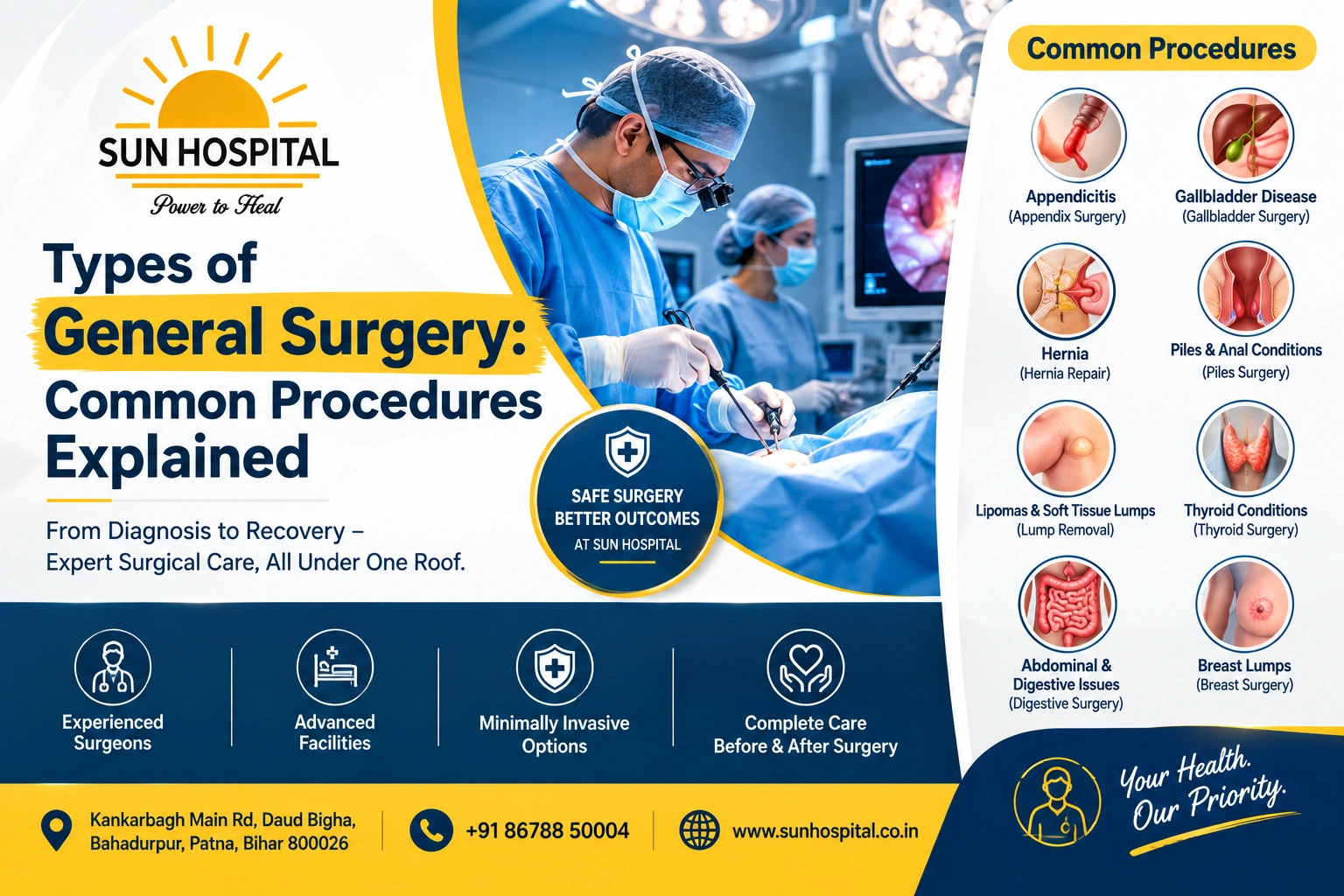
Say the words “general surgery” to most people, and they picture one specific operation. That’s not really how it works though. There are actually several types of General Surgery, and they cover a lot of ground, everything from a fairly routine hernia repair to more involved work on the digestive tract.
It helps to know a bit about these procedures. Not so you can diagnose yourself, but so you recognize when it’s time to actually see someone. And surgery isn’t always where things start. A general surgeon will go through your symptoms first, your history, a physical exam, whatever test reports you’ve got, before deciding if an operation even makes sense.
If you’re weighing your options for general surgery in Patna, the team you choose matters, and so does the hospital. You want a place that has proper diagnostics, a well-run operation theatre, anesthesia support you can trust, nurses who know what they’re doing, and someone keeping an eye on you after the surgery too.
What Are the Main Types of General Surgery?
The Types of General Surgery that get performed really come down to what’s wrong with the patient and how tricky the problem is. Some of these are done all the time, almost routine at this point. Others take a lot more planning and closer watching once the operation’s done.
Hernia Surgery
Hernia repair is probably one of the most common general surgical procedures you’ll come across. A hernia forms when an organ or a bit of tissue pushes its way through a weak spot in the muscle around it.
Inguinal, umbilical, incisional, these are the types doctors see the most. You might notice a bulge, some discomfort, a heavy sort of feeling, or pain that flares up when you cough, lift something, or stand around too long.
Depending on the size and where exactly it is, the surgeon may go with open repair, or lean toward a minimally invasive surgery approach instead. Either way, it comes down to your own health and what fits your situation.
Gallbladder Surgery
Gallbladder issues, gallstones especially, sometimes need to be dealt with surgically. Gallstones can bring on abdominal pain, nausea, that nagging indigestion feeling, and honestly they don’t always go away on their own. In some cases they cause inflammation or infection, and that’s when things get more serious.
Gallbladder surgery, or cholecystectomy if you want the medical term, is common once surgery is decided on. A minimally invasive method often comes into the picture here too, when it suits the case.
Appendix Surgery
Appendicitis is what happens when the appendix gets inflamed. The pain usually kicks off somewhere around the abdomen, then tends to settle into the lower right side. Nausea, vomiting, fever, not feeling like eating, these often show up alongside it.
Once appendicitis is confirmed, appendix surgery (taking the appendix out) is usually the recommended move, mainly to avoid bigger complications later. If the pain in your abdomen is bad or just keeps getting worse, don’t sit on it, get it looked at.
Types of General Surgery for Digestive Conditions
A fair chunk of the Types of General Surgery out there deal with the digestive system directly. Which procedure gets used depends on which organ’s involved, how severe things are, and the patient’s overall health picture.
Intestinal and Bowel Surgery
Some intestinal conditions end up needing surgery once medication and other treatments haven’t done the job. That could mean taking out a diseased section of intestine, fixing a blockage, or sorting out some other structural issue.
It really comes down to the diagnosis. Before an operation gets recommended, the surgeon will usually look through imaging, bloodwork, endoscopy results, whatever’s relevant to the case at hand.
Colorectal Procedures
Certain conditions in the colon or rectum can also call for surgery. Think specific tumors, complicated infections, bowel obstructions, or other diseases messing with normal bowel function.
Treatment planning here is very much case by case. The surgeon looks at where the problem sits, how far it’s spread, your general health, and whether a less invasive option might work just as well.
Breast and Soft-Tissue Surgery
General surgeons also deal with certain breast and soft-tissue issues. Depending on what’s found, treatment might mean removing a lump, draining an abscess, running a biopsy, or taking out abnormal tissue.
Breast Lump Evaluation
Not every lump needs to come out surgically. A doctor will usually start with a clinical exam, then move to imaging or tissue testing to figure out what’s actually going on.
If a biopsy or removal turns out to be necessary, the surgeon should walk you through why, what recovery looks like, and what follow-up care involves.
Abscess and Soft-Tissue Conditions
Skin and soft-tissue infections can sometimes turn into an abscess, basically a pocket of pus sitting under the skin. Depending on how big or serious it is, it might need draining along with other treatment.
Getting it checked early can stop things from spreading and lowers the odds of complications down the road.
Minimally Invasive Types of General Surgery
Modern surgical care leans more and more on minimally invasive techniques these days. Instead of one big cut, a lot of procedures can now be done through a few small openings, using specialized tools and a tiny camera.
Laparoscopic Surgery
Laparoscopic Surgery in Patna gets used a lot for things like gallbladder disease and certain kinds of hernia. The surgeon works through small incisions, using specialized instruments, while watching everything on a monitor.
The upside can be smaller cuts, less pain afterward, and getting back to your normal routine faster. That said, it’s not the right fit for every patient or every condition, it really depends on the case in front of you.
When Is Open Surgery Necessary?
Open surgery still ends up being the better call for certain complex conditions, emergencies, cases with previous surgical complications, or situations where the surgeon just needs more direct access to work with.
Whether it’s open surgery or a minimally invasive route, that decision should come from the surgical team, and only after they’ve properly looked at the patient’s specific condition.
General Surgical Treatment in Patna: What Patients Should Expect
General surgical treatment in Patna should start with a proper medical assessment, not a rush straight into the operating room. During that first consultation, the surgeon will typically go over your symptoms, medical history, current medications, any past procedures, and whatever diagnostic reports you’ve brought along.
Preoperative Assessment
Before an operation, you’ll likely go through blood tests, imaging, an anesthesia evaluation, and a few other checks, depending on the procedure and how you’re doing health-wise.
Be honest with your medical team about existing conditions, allergies, medications, supplements, past surgeries, all of it. The more complete the picture, the safer the plan they can build for you.
Recovery and Postoperative Care
How quickly you bounce back depends on the procedure itself, the technique used, your general health, and honestly, how your body responds to healing. Some people are back to their routine within days. Bigger operations naturally take longer.
Postoperative instructions usually cover medication, wound care, diet, how much activity you can handle, and follow-up visits. Stick to them closely, and if you notice unusual pain, fever, changes at the wound site, trouble breathing, or anything that just feels off, get in touch with your medical team right away.
How to Choose a General Surgery Hospital in Patna
When you’re on the hunt for a general surgery hospital in Patna, don’t just go by location or a star rating you saw online. The hospital needs real surgical infrastructure and a team that’s actually qualified to handle your specific condition.
Check Surgical Expertise and Facilities
Ask whether the hospital has experienced general surgeons on staff, a properly equipped operation theatre, anesthesia support you can rely on, diagnostic services in-house, trained nursing staff, and someone monitoring you after surgery too.
Consider Complete Patient Support
A hospital that coordinates care before and after surgery makes the whole experience a lot easier to get through. You should understand how consultations, tests, admission, the surgery itself, discharge, and follow-up visits all connect together.
If you’re looking for the best hospital in Patna for surgical care, base that decision on the treatment you actually need, the surgical expertise on offer, the hospital’s infrastructure, its safety track record, and how well they support you afterward.
At Sun Hospital, patients can sit down with the medical team, talk through their surgical concerns, and get guidance built around their own condition and treatment needs.
When Should You Consult a General Surgeon?
Abdominal pain that won’t quit, a lump that’s growing, digestive issues that keep coming back, a painful hernia, signs pointing to appendicitis, gallbladder trouble, or a wound that just won’t heal, any of these are good reasons to get checked out.
Don’t try to self-diagnose based on what you read online. A general surgeon can tell you whether the problem actually needs surgery, or whether medication, observation, or a few lifestyle changes will do the trick instead.
The World Health Organization (WHO) has pointed out how important safe, quality healthcare and proper access to essential surgical care really are. That’s exactly why picking qualified professionals and the right medical facility matters so much once surgery is on the table.
Final Thoughts on Types of General Surgery
The Types of General Surgery cover a wide range of procedures, the abdomen, digestive system, breast, skin, soft tissues, and other areas of the body. Hernia repair, gallbladder removal, appendectomy, intestinal procedures, colorectal surgery, abscess drainage, select minimally invasive operations, they all fall under general surgical practice.
Not every condition needs an operation. What’s right depends on the diagnosis and your overall health. A proper consultation lets the surgeon assess what’s going on, walk you through your options, explain the risks, and build a treatment plan that actually fits you specifically.
If you’re dealing with symptoms that might need surgical attention, don’t put off getting advice. Getting checked early is usually the best way to understand what comes next.
Frequently Asked Questions
1. What are the most common Types of General Surgery?
Common procedures include hernia repair, gallbladder removal, appendectomy, abscess drainage, certain bowel procedures, colorectal surgery, and select breast or soft-tissue operations.
2. What does a general surgeon treat?
A general surgeon looks after a wide range of conditions involving the abdomen, digestive system, breast, skin, soft tissues, and other areas that need surgical care.
3. Is general surgery always performed through an open incision?
No, not at all. A lot of procedures these days get done using minimally invasive techniques like laparoscopy. What’s right depends on the patient’s condition and the procedure needed.
4. How do I find a general surgery hospital in Patna?
Look at the hospital’s surgical team, their track record, operation theatre facilities, diagnostic support, anesthesia services, nursing care, emergency support, and how well they handle postoperative follow-up.
5. What is the difference between general surgery and laparoscopic surgery?
General surgery is the broad specialty covering a whole range of conditions, while laparoscopic surgery is one specific minimally invasive technique within it. A general surgeon might choose to perform certain operations laparoscopically when that’s the better fit for the patient.