
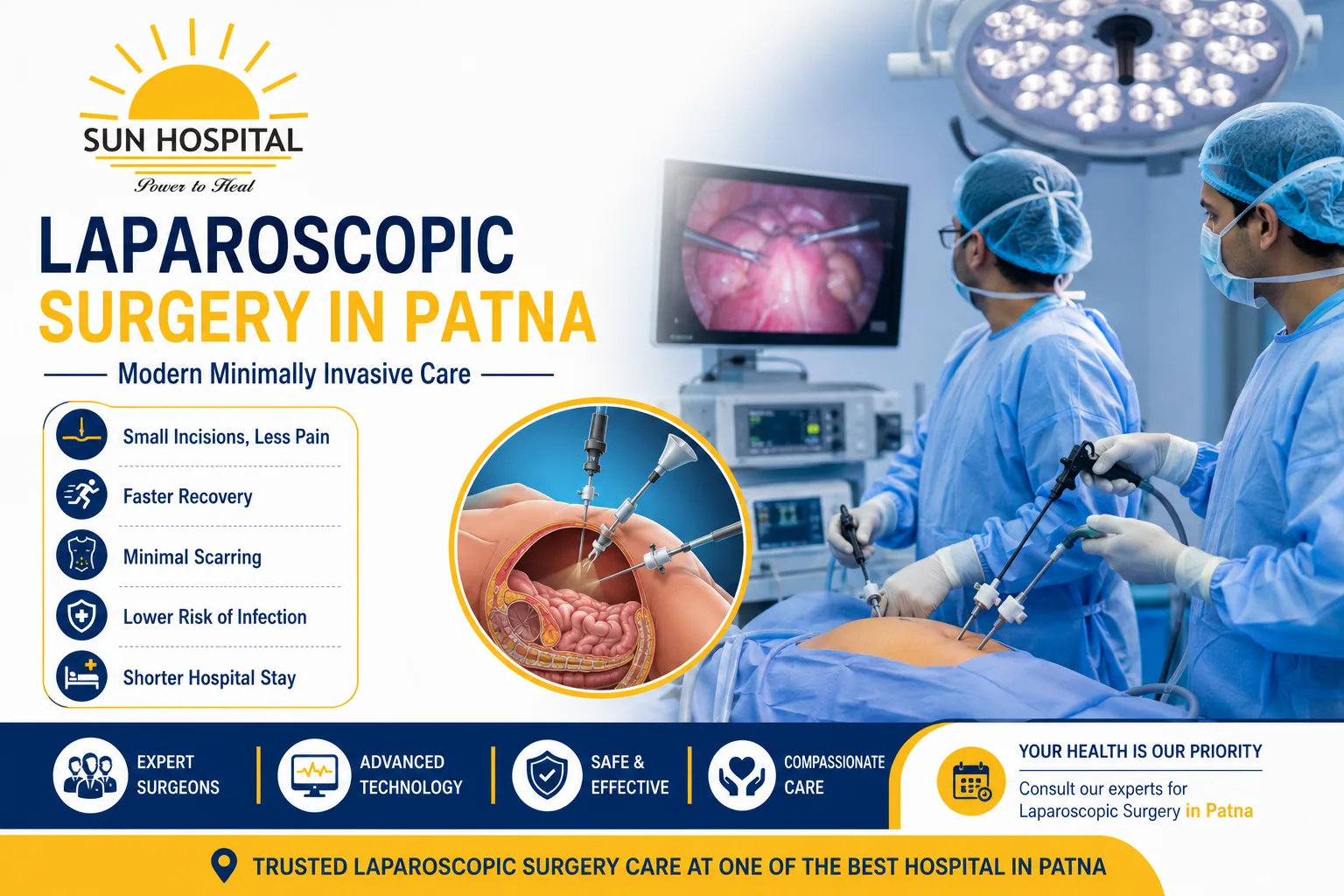
Ask anyone who had surgery twenty years ago what they remember most, and it’s rarely the operation itself, it’s the long hospital stay afterwards, the big bandage, and the weeks it took to feel normal again. Surgery has moved on a great deal since then. With a camera the size of a pen and instruments no thicker than a finger, doctors can now do inside the body what once needed a large opening across the abdomen. That’s the whole idea behind laparoscopic surgery in Patna, and it’s why so many patients today walk out of the hospital in far better shape than their parents ever did after similar operations.
At Sun Hospital, this is the approach our surgical team leans on for most abdominal procedures, simply because the results speak for themselves, less pain, quicker discharge, and a much smoother road back to daily life. If a doctor has recently suggested surgery to you or a family member, this guide should answer most of the questions running through your mind right now.
Understanding Laparoscopic Surgery in Patna: The Basics
Put simply, laparoscopic surgery in Patna is keyhole surgery, the surgeon works through a few small cuts instead of one long incision. A slim instrument called a laparoscope, carrying a light and a camera, goes in through one of these openings and projects a clear, magnified picture of the inside of the abdomen onto a screen in the operating room. The surgeon then works with slender tools inserted through the remaining small cuts, guided entirely by that live image.
The contrast with open surgery is significant. There’s far less cutting through muscle and tissue, noticeably less blood loss, and scars that fade to almost nothing within a few weeks. For patients who feel anxious at the thought of an operation, knowing this difference upfront often makes the whole experience feel far less intimidating.
How Does This Kind of Surgery Actually Get Done?
Tiny Openings, Advanced Camera Work
Rather than a single large cut, the surgeon works through a handful of incisions, none more than a centimetre or so wide. The laparoscope and instruments pass through these openings while the surgeon watches an enlarged, high-definition view on a monitor. Since the incisions are so small, patients who go through laparoscopic surgery in Patna typically describe far less discomfort afterwards, along with a quicker return to sitting up, eating, and moving around.
Why the Precision Here Genuinely Matters
That magnified screen view isn’t just for show, it lets the surgeon spot blood vessels, tissue layers, and organ boundaries with a level of clarity that’s hard to match in open surgery. This translates directly into fewer bleeding complications, a lower infection risk, and shorter hospital stays, which is exactly why this technique has become the go to option for so many abdominal conditions today.
Conditions Commonly Treated Through Keyhole Surgery
Removing a Diseased Gallbladder
Gallstones are, without question, one of the most frequent reasons patients end up needing an operation. The gallbladder is taken out through a few small cuts, and most people are back to eating solid food and walking around within a day, a stark contrast to the longer recovery that used to follow open gallbladder removal.
Repairing Hernias From the Inside
A hernia forms when soft tissue pushes through a weak point in the abdominal wall, something that tends to get worse, not better, if it’s left unattended. The keyhole method reinforces that weak spot using mesh and precise stitching, and patients generally go home sooner and get back to normal movement faster than with the traditional repair.
Handling Appendicitis Quickly and Safely
Appendicitis rarely gives advance warning, and it needs to be dealt with fast. Removing the inflamed appendix through small incisions keeps the wound infection rate low and shortens the time it takes for a patient to feel like themselves again, something that counts for a lot in an emergency setting.
Why So Many Patients Are Choosing This Approach Today
A Faster Route Back to Everyday Life
Smaller cuts mean less for the body to repair, which is really the whole story behind why recovery is so much quicker. Shorter hospital stays and an earlier return to work and family time are usually the two things patients care about most, and this technique delivers on both.
Noticeably Less Pain, Barely Any Scarring
Less cutting naturally means less post-operative pain and a much lighter reliance on painkillers during recovery. The smaller, faded scars are also a real plus for many patients, particularly those who are conscious of visible marks on the skin.
A Reduced Chance of Wound Infection
Because the internal organs are exposed to the outside air for a much shorter time and through much smaller openings, the infection rate tends to be lower than with open procedures. Paired with strict sterilisation standards in the operating room, this adds an extra layer of safety to the entire process.
Who Is a Good Fit for This Type of Surgery?
Not every patient or every diagnosis is automatically suited to a keyhole approach, which is exactly why a proper clinical evaluation always comes first. Broadly, people dealing with gallstones, hernias, appendicitis, certain intestinal issues, or those needing a diagnostic look inside the abdomen tend to be good candidates. A thorough physical examination, blood work, and imaging studies help the surgical team decide what genuinely suits each patient, rather than applying the same plan to everyone.
Getting Ready Before the Day of Surgery
Good preparation makes a bigger difference to the outcome than most patients realise. The surgical team goes through the patient’s medical history, current medicines, known allergies, and any past operations well ahead of the scheduled date. Blood tests, an ECG, and relevant imaging are usually part of this process, depending on the patient’s age and overall health.
Clear instructions are also given about fasting, when to stop certain medicines, and staying hydrated in the days before the operation. Following these instructions closely genuinely lowers the risk of complications during anaesthesia and helps the entire day go far more smoothly.
What to Expect During Recovery
Getting Up and Moving Early
Patients are usually encouraged to take a short, gentle walk within hours of finishing the operation. It isn’t just about comfort, early movement supports better blood circulation, cuts down the risk of clots, and speeds up healing considerably.
Eating Sensibly and Avoiding Setbacks
A diet with enough protein, fresh vegetables, and fluids helps tissue repair itself and keeps the immune system working well during recovery. Smoking, drinking, and strenuous activity are best avoided until the surgeon gives the clear signal, since these habits can quietly slow healing down.
Why Follow-Up Appointments Really Matter
Coming back for the scheduled review lets the surgical team check how the wound is healing, remove stitches if needed, and pick up on any early warning signs before they become bigger problems. These visits are also a good chance to ask about resuming work, travel, or exercise safely.
Why Patients Choose This Standard of Surgical Care
Picking the right hospital for an operation isn’t a decision to rush. It calls for experienced surgeons, a well-equipped operating room, reliable imaging support, and a team that stays involved well past the day of discharge. At Sun Hospital, every case of laparoscopic surgery in Patna follows this same standard of care, in line with globally recognised safety and infection-control protocols set out by the World Health Organization.
For anyone who is currently comparing options and searching for the best hospital in Patna, it’s worth looking past the equipment on offer alone and paying attention to the surgical team’s experience, how honestly they explain the procedure, and the quality of care offered after the operation, these are the things that shape how smooth the recovery actually turns out to be.
Final Thoughts
Laparoscopic surgery has transformed modern surgical care by making many procedures safer, less invasive, and more comfortable for patients. Smaller incisions, reduced pain, faster recovery, lower infection risk, and improved cosmetic results have made this technique the preferred choice for many abdominal and digestive surgeries.
Whether treatment is required for gallstones, hernias, appendicitis, or other abdominal conditions, choosing experienced specialists for laparoscopic surgery in Patna ensures accurate diagnosis, advanced treatment, and comprehensive postoperative care. Early consultation with an experienced surgical team helps patients make informed healthcare decisions and return to a healthier, more active life with confidence.
Frequently Asked Questions
- What does laparoscopic surgery actually mean?
It’s a minimally invasive way of operating through a few small incisions, using a camera-fitted tool called a laparoscope along with slim surgical instruments.
- Is it really safer than open surgery?
For most abdominal conditions, yes, patients tend to experience less pain, smaller scars, a lower infection risk, and a shorter hospital stay. That said, the right choice always depends on the individual case.
- Which conditions are usually treated this way?
Gallstones, hernias, appendicitis, certain gastrointestinal problems, ovarian cysts, and diagnostic evaluations of the abdomen are among the most common.
- How soon can I get back to my normal routine?
Many patients manage light daily activity within a few days, though the full recovery timeline depends on the specific procedure and the patient’s overall health.
- Does it leave visible scars?
Since the cuts are so small, scarring is usually minimal and fades noticeably within a few months, unlike the more visible scars left by open surgery.